Harām
2017
Film
Nationalism, Militarism
Director: Cynthia Madansky
Cinematographer: Michele Paradisi
Sound: Binya Reches
Design: RRNR
16 mm ◊ 47 min.
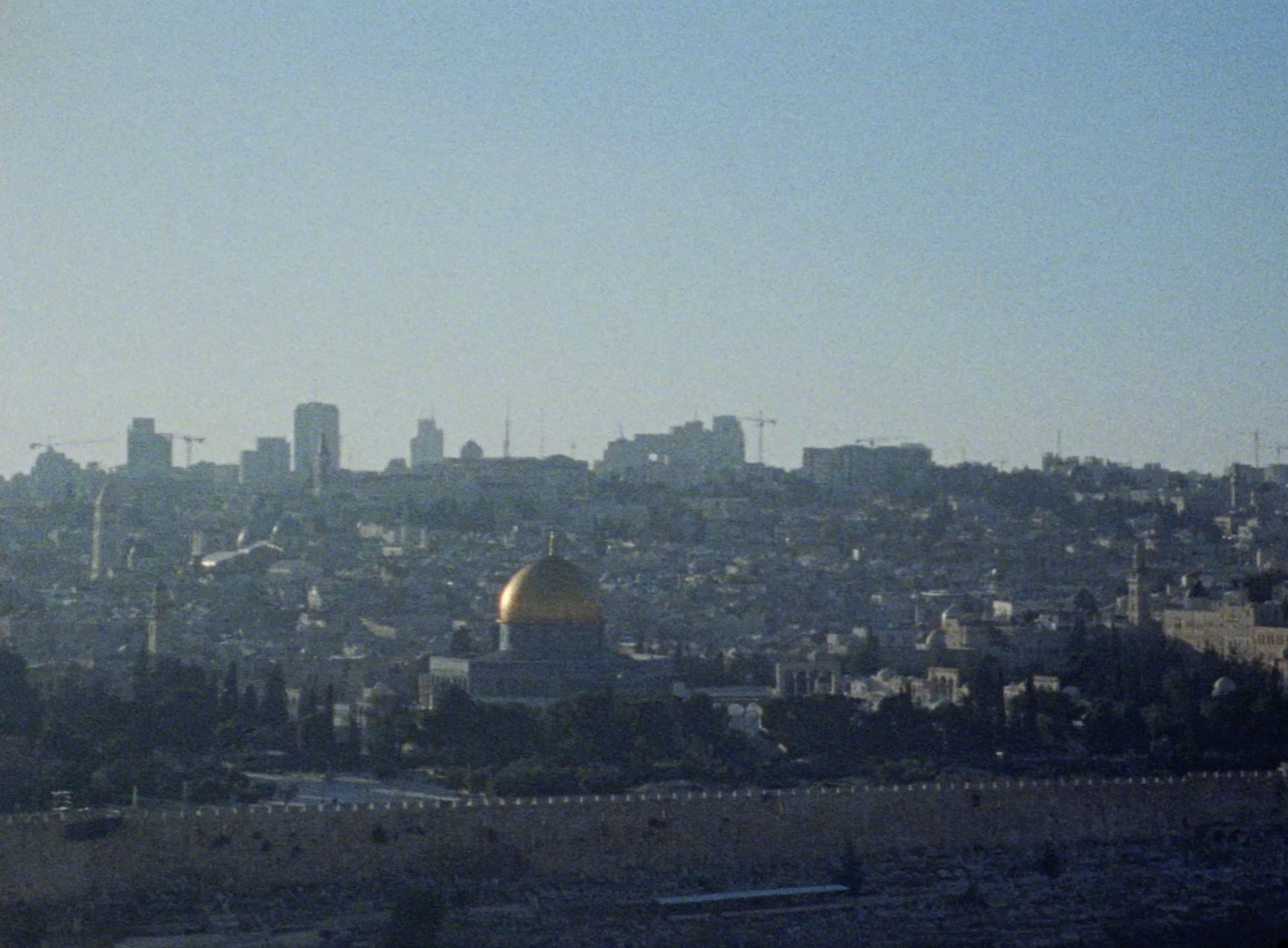
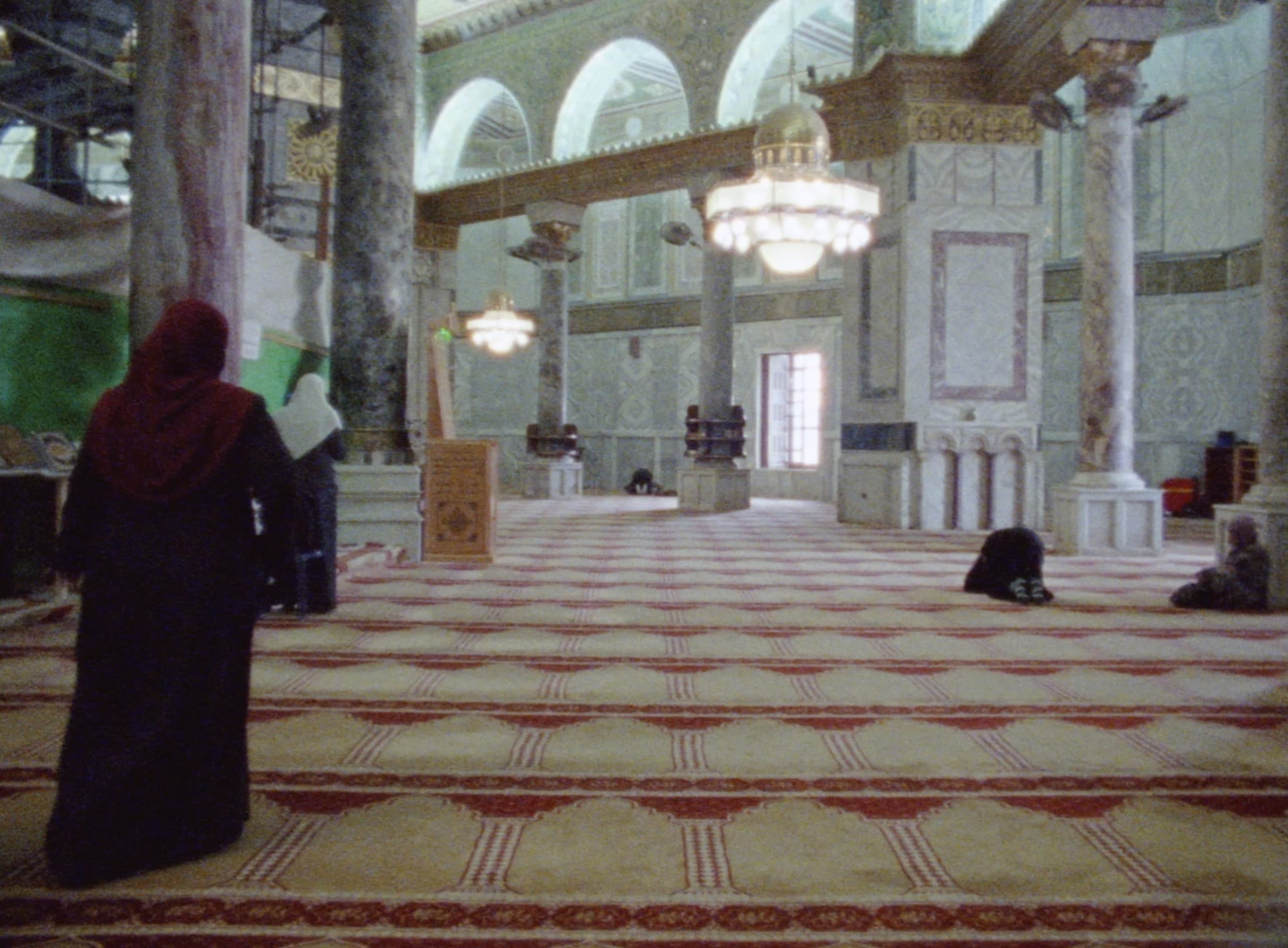
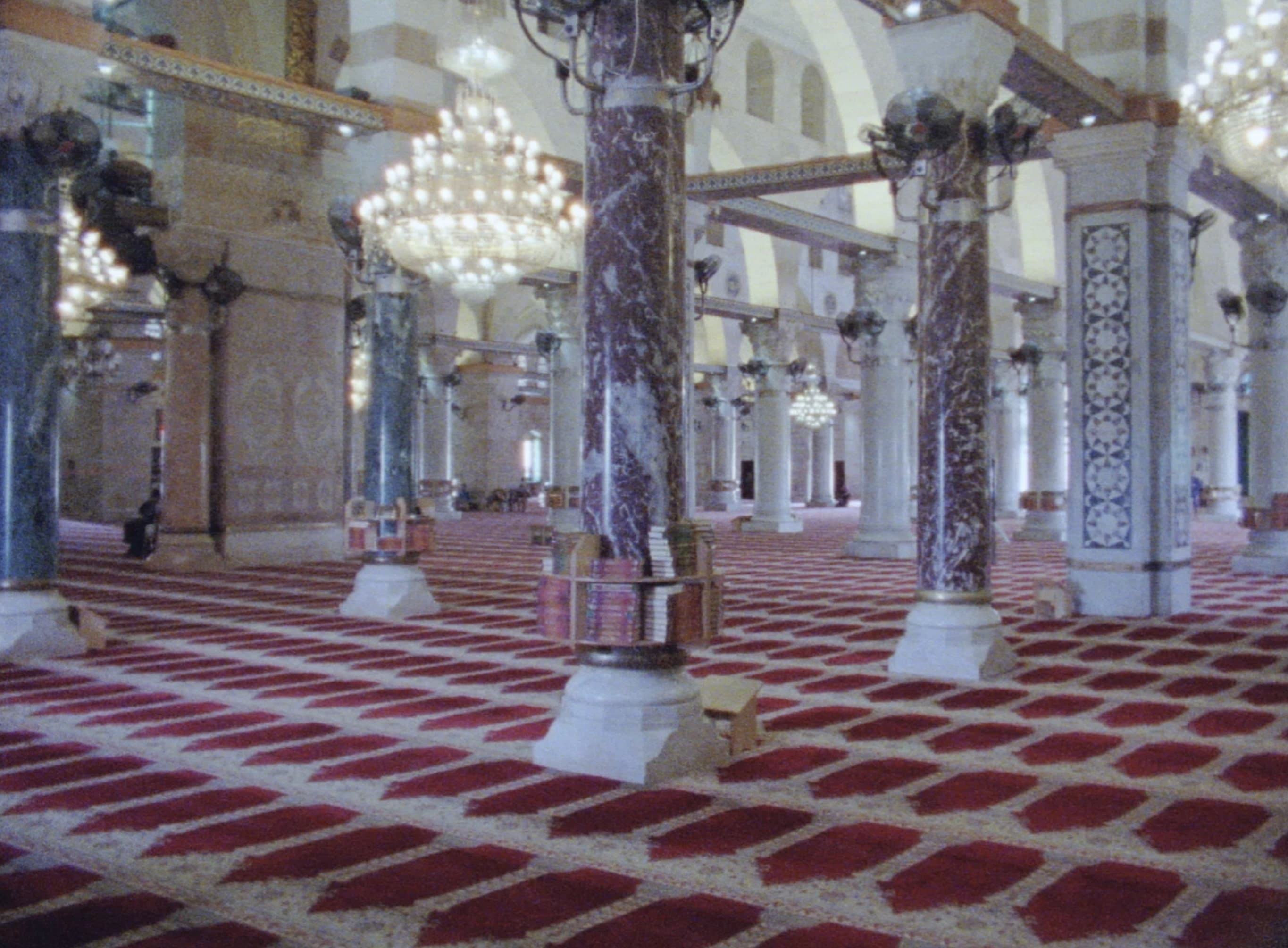
“There are two narratives. Two very conflicting narratives, actually.” So opens Cynthia Madansky’s Harām, her forceful, incisive examination of the contested holy site of the Haram Al Sharif (Arabic) / Al Aqsa Mosque also known as Har haBayit (Hebrew) / Temple Mount located in the Old City of Israeli occupied East Jerusalem.
Harām is a portrait of the ongoing occupation of East Jerusalem, which was annexed in 1967, on Palestinian sovereignty over the Haram Al Sharif, in relation to the exponential growth and support of the Third Temple movement (over the last 70 years), which calls for the rebuilding of the Third Jewish Temple on this site.
In Harām Madansky explicitly shows, and gives witness to the two narratives that have not only continued to play out ideologically through military occupation. While this ultimate gesture of dominance has yet to be formally undertaken, (the Islamic Waqf, situated in Jordan officially still controls the holy site) the all-but-ultimate control of the Israeli state on the space is already explicitly, forcefully exerted.
The two protagonists of the film, are the offscreen voices of two Jerusalem residents, one, a Palestinian man born in the early 60s in the Old City, before the city was occupied, who details not only the personal reflections and the limitations of movement imposed on Palestinians by the apartheid state, historical episodes, like the Israeli leveling of the adjacent Moroccan Quarter to construct the Wailing Wall and a clearly mapped reading of the history of the occupation of East Jerusalem, the impact on the sovereignty of Palestinians to pray at this holy site and the complete destruction of community and life. The other voice is a thirty year old Israeli Jewish woman, a formally secular Jew who “returned to religion” who straightforwardly describes through her lens of religious belief the inevitability and need for the construction of the Third Temple. Madansky then punctuates the film with two types of brief intertitles detailing the semiotics and politics of naming the site and gates to the site (Arabic / Hebrew / English) and other succinct facts related to law and history, that contextualize the expansion of the occupation with the growth of the Third Temple movement into an integral part of the mainstream political agenda.
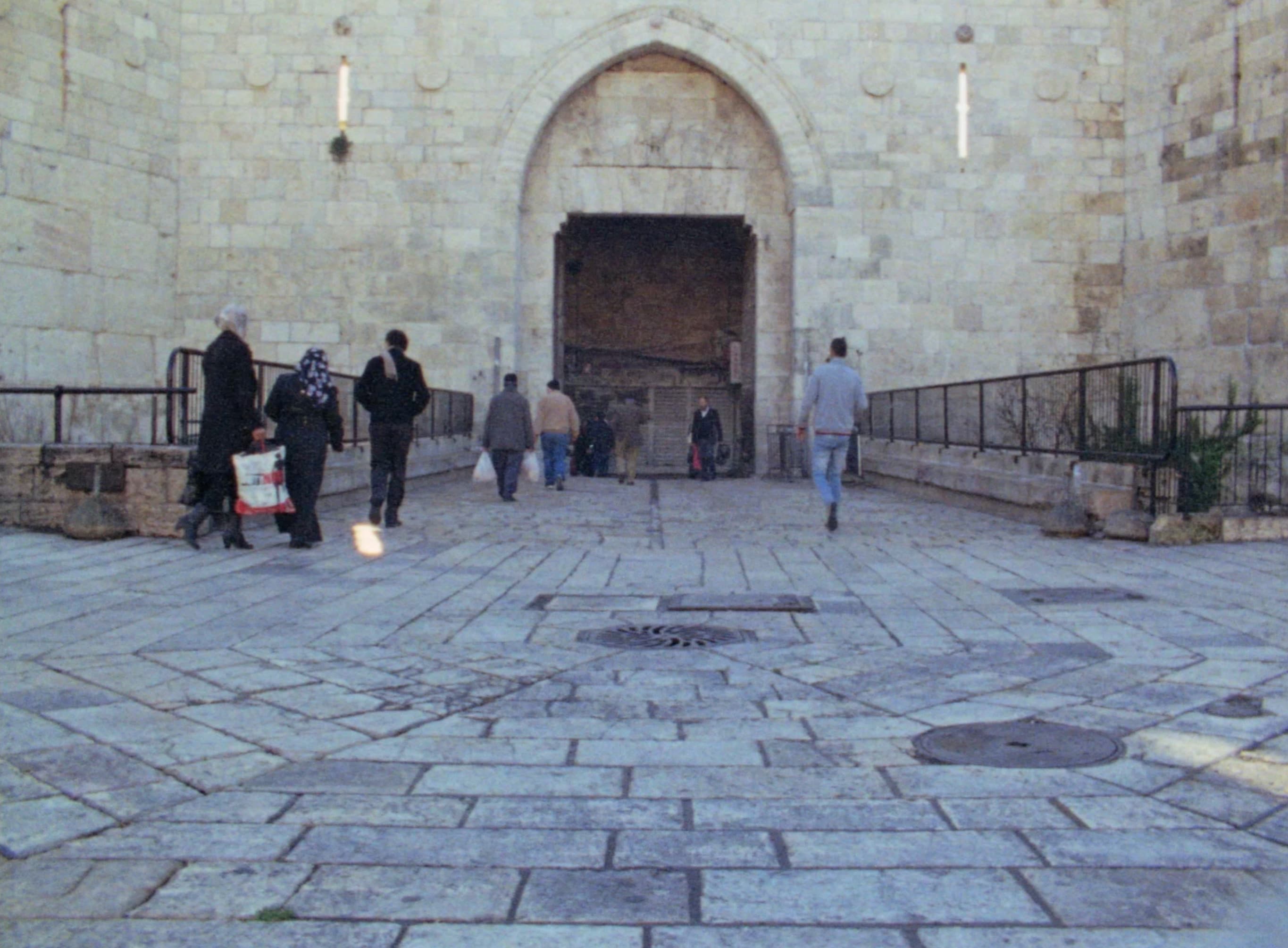
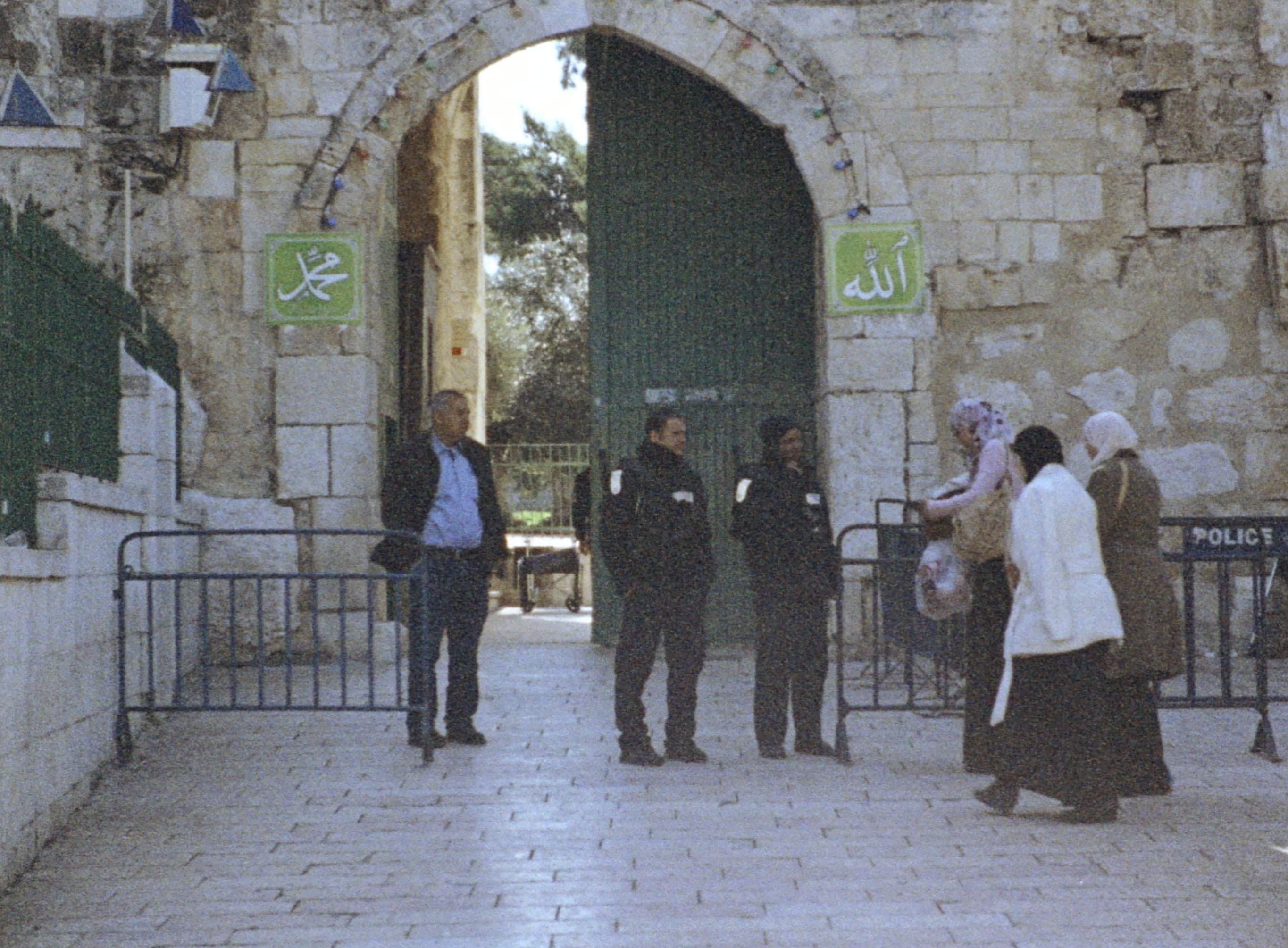
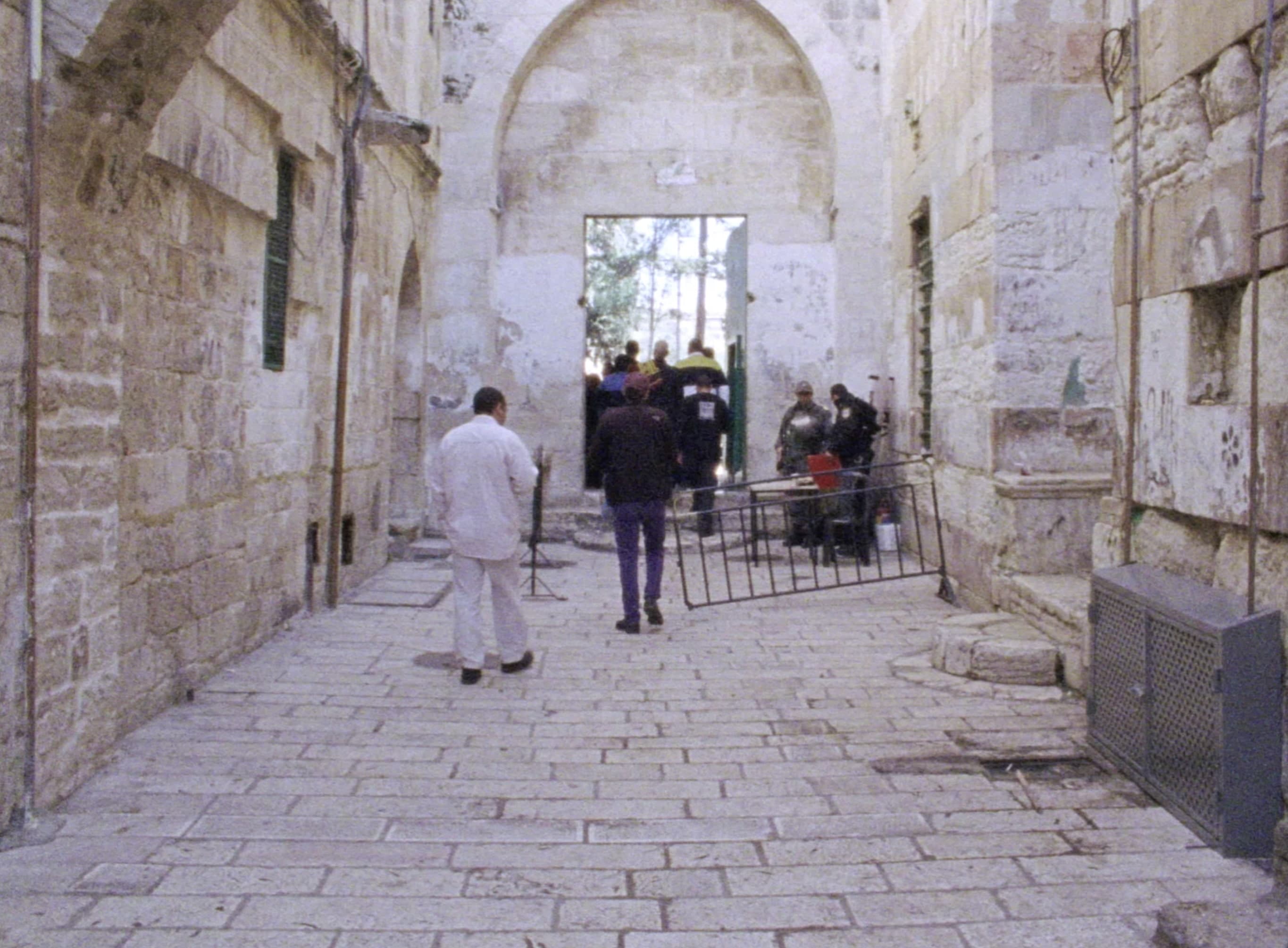
While Harām explicitly connects to Madansky’s previous work shot in Palestine—namely Treyf (1998) and Still Life (2004)—it trades the former’s interrogations of West Bank settlements and the latter’s incensed j’accuse for something quieter and slower but equally barbed. Conceptually, it also builds upon films like Minot, ND (2008) and 1+8 (2012) in their concern with borders. Formally, the film circulates the perimeter of Harām Al-Sharif, returning frequently to images of gates and entryways, turned into checkpoints, controlled by Israeli soldiers.
Employing almost exclusively fixed, wide compositions, the form reflects the conceptual approach writ large, which is one of reserved, observational distance. There is no need to overemphasize the unjust nature of the situation when it is clear to see.