E42
2015
Film
Dance, Nationalism, War
Director: Cynthia Madansky
Cinematographer: Michele Paridisi
Dancer: Daniele Albanese
Interview: Katja Tenenbaum
Performance: Olga Melassecchi
Music: Alvin Curran
16 mm ◊ 33 min.
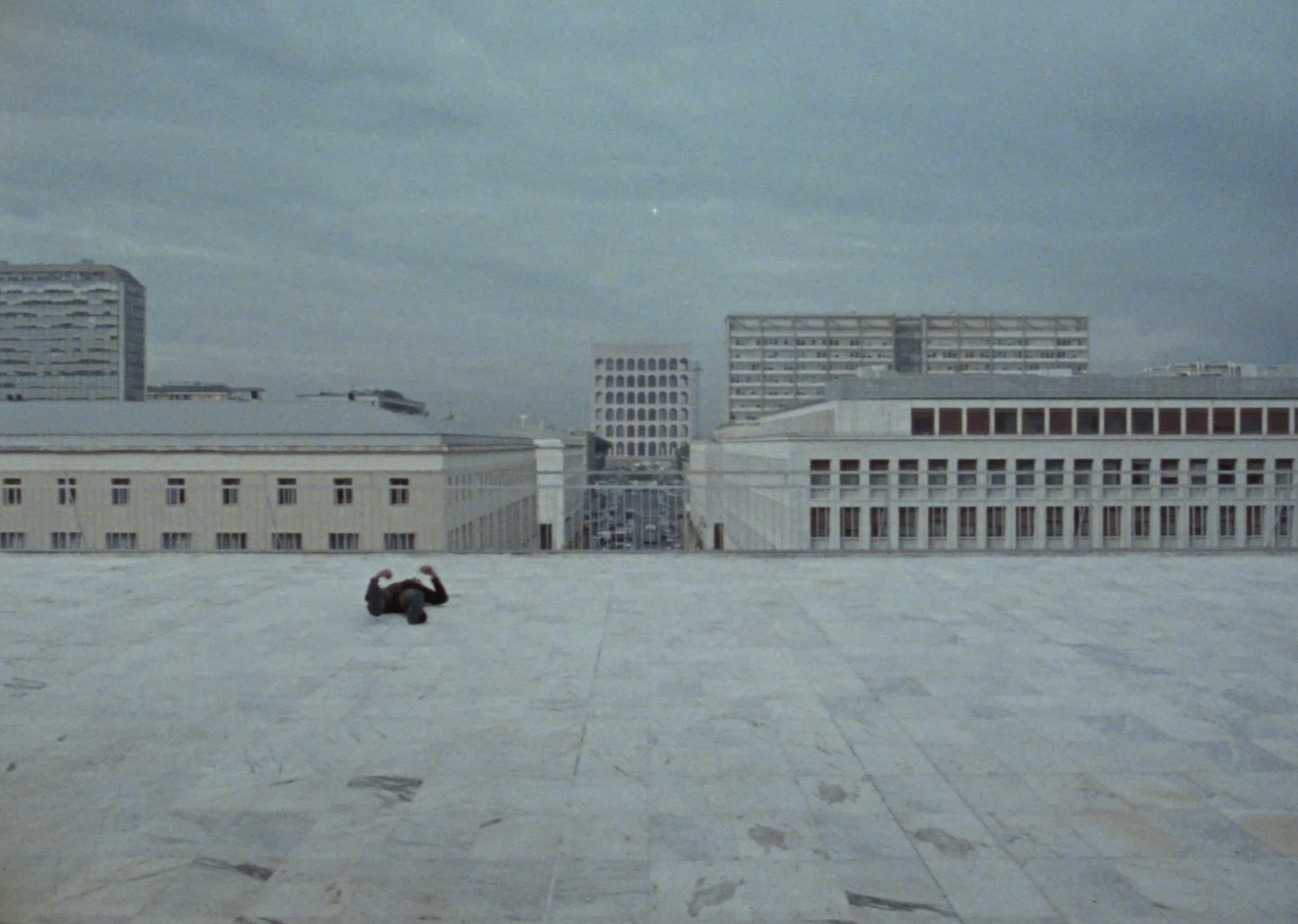
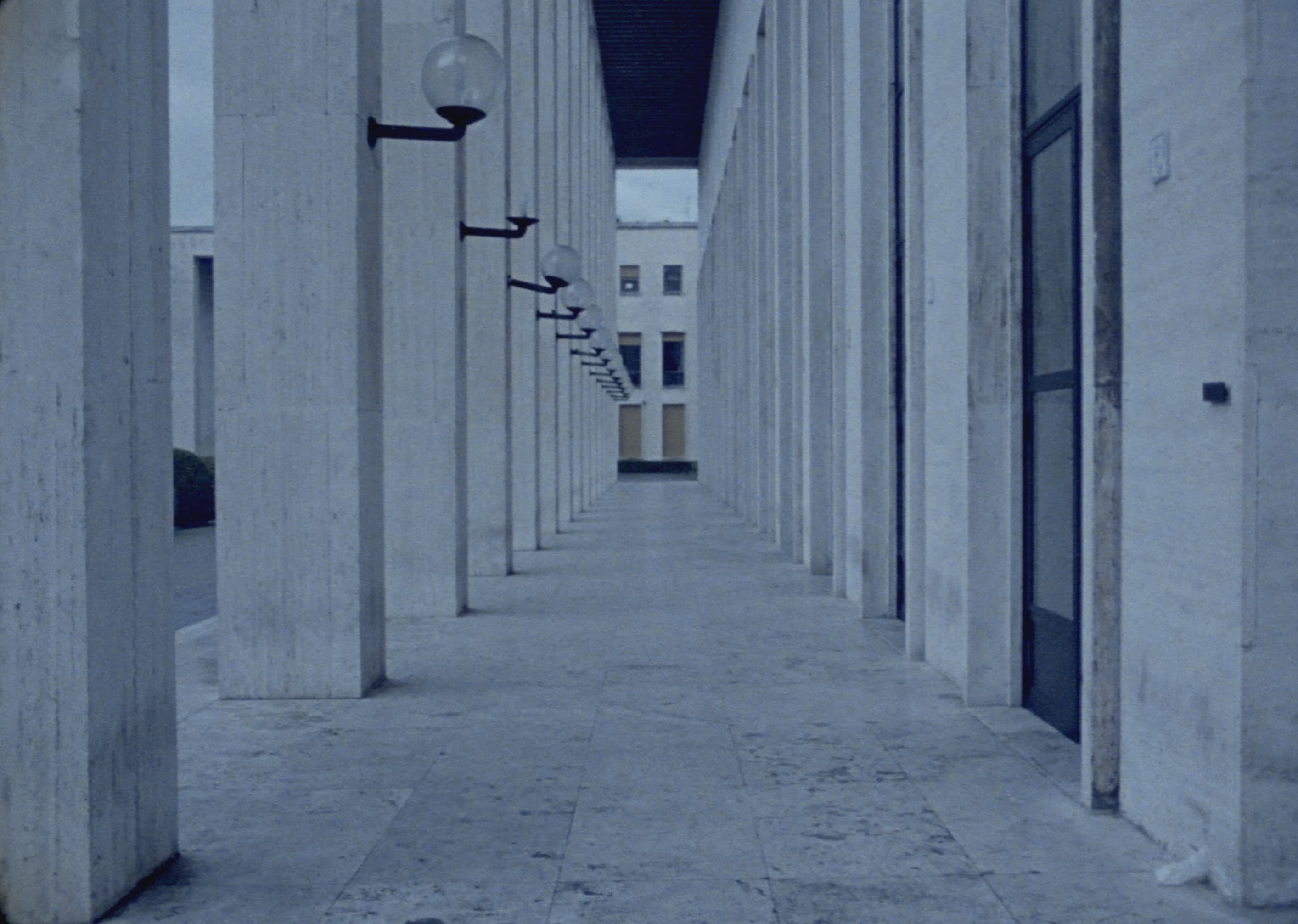
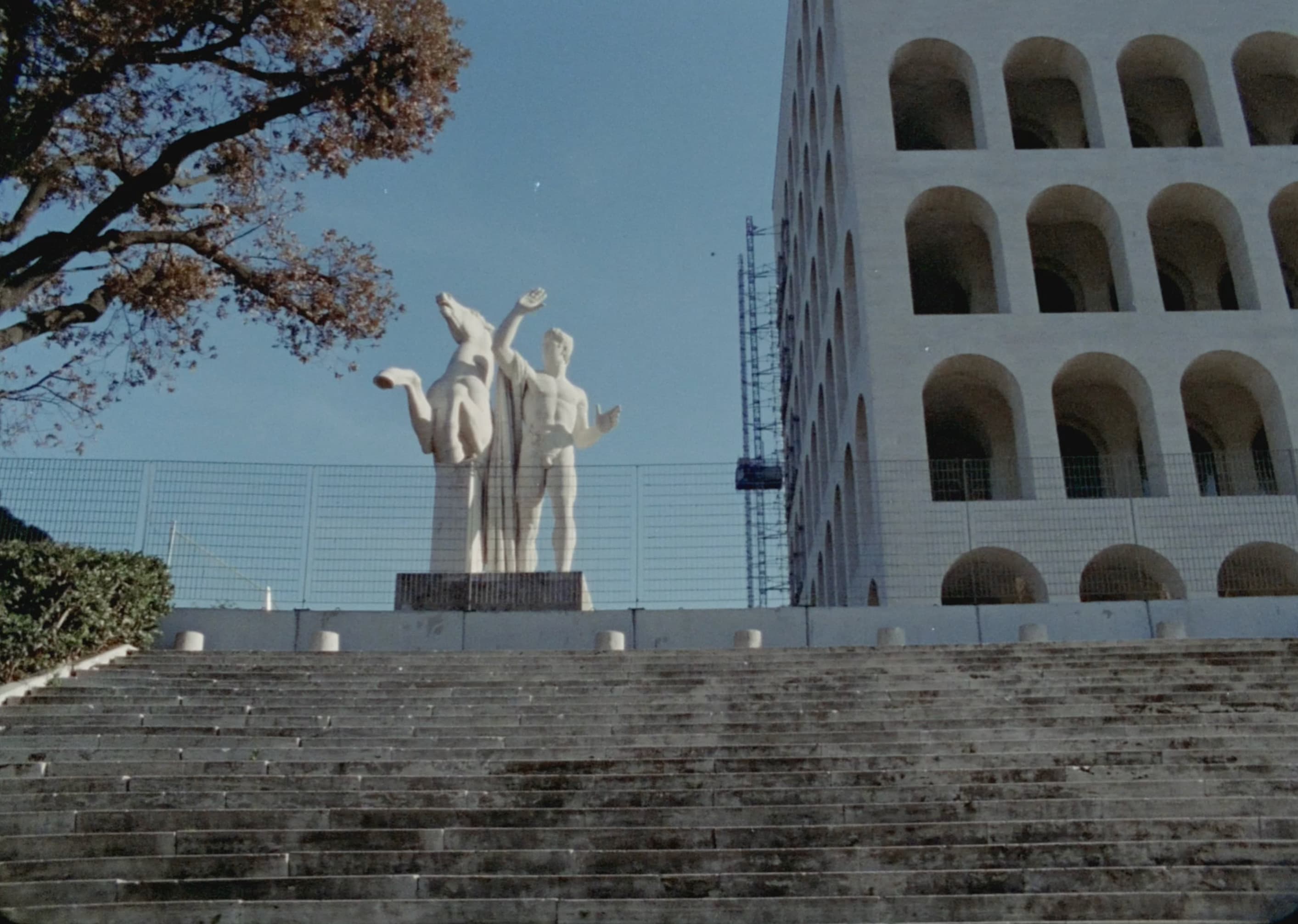
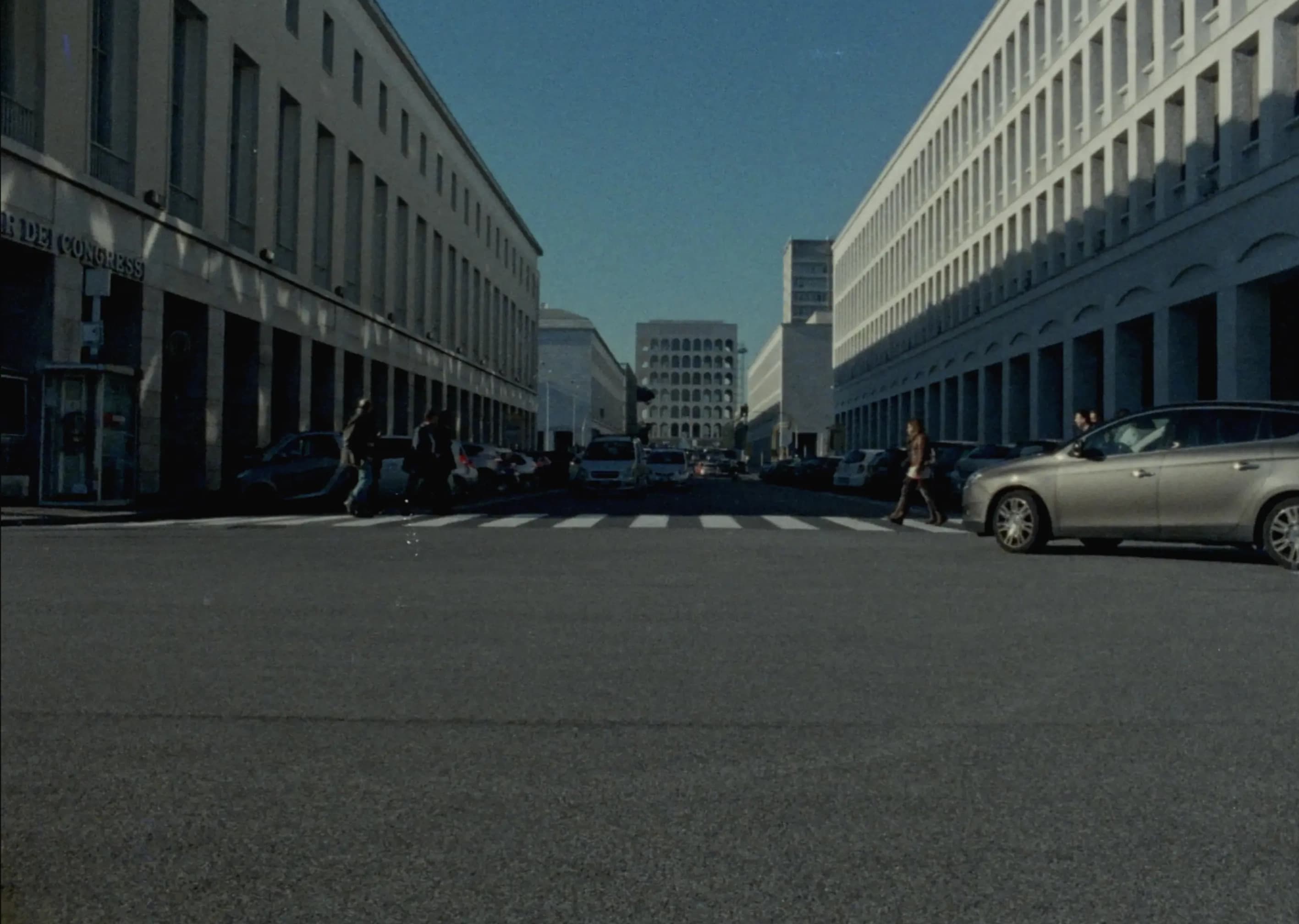
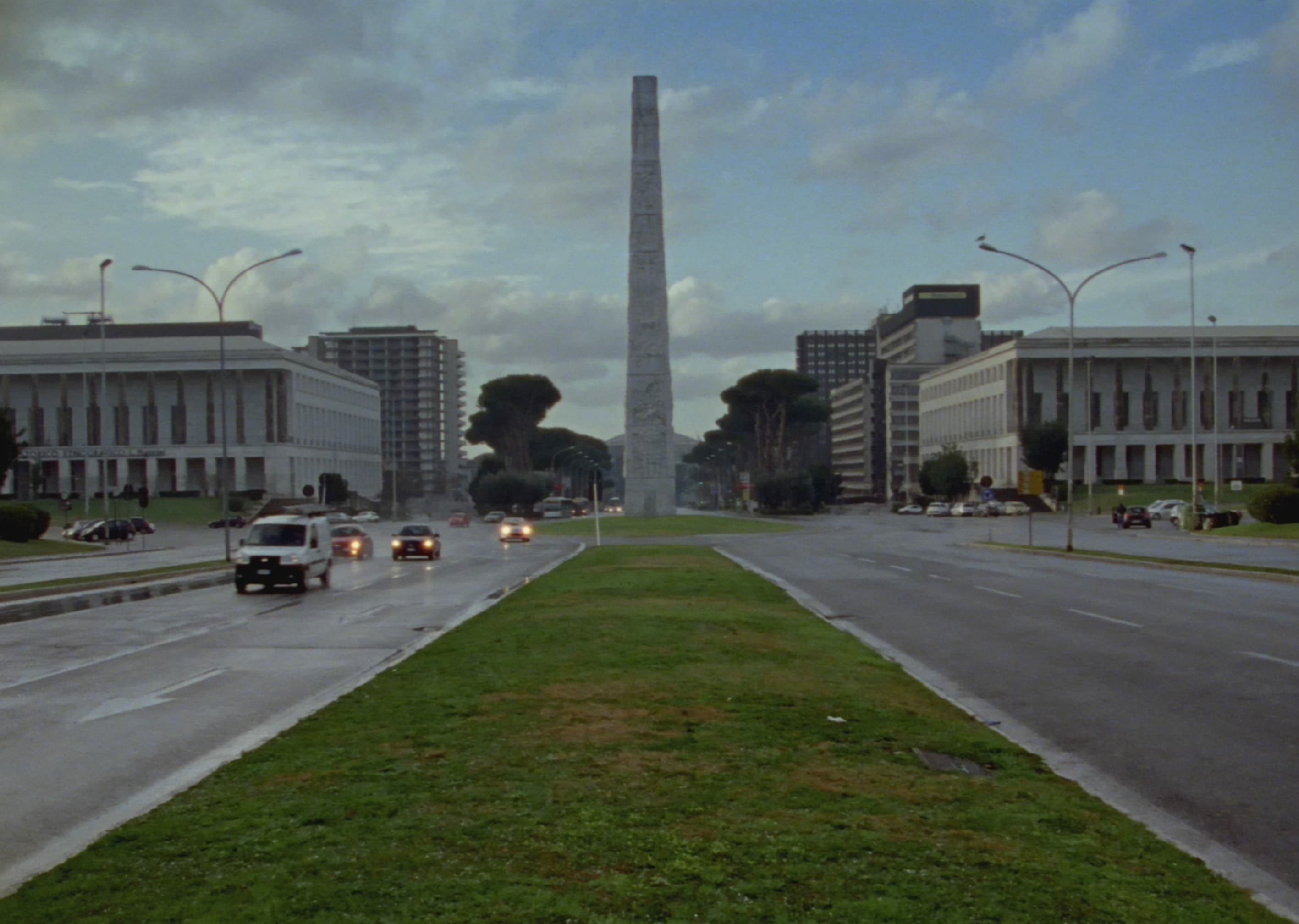
Designed in 1937 under the direction of Benito Mussolini, as an architectural model of the perfect fascist city and eventually constructed after the war, with the same architects, Rome’s modernist Esposizione Universale di Roma (EUR) is today a lasting pinnacle of fascist architecture. It’s also, in Madansky’s film E42, a site whose impassive, raw concrete belies a malleable history. Despite its intended use as the central area for a never realized 1942 World’s Fair and to host public events of Fascist solidarity, it was never inaugurated for such purposes and today houses the national archives and headquarters of various national agencies.
Stylistically, Madansky at once adheres to and subverts the minimal, ascetic form of the space itself—matching the grand, modernist architecture with fixed, planimetric compositions. Not all is static, however, as an arhythmic score by the American-born, Rome-based composer Alvin Curran and a performance by dancer Daniele Albanese disrupting the rigidity of the space and the ideals they represent. Each of the spaces Albanese occupies and subverts through his oppositional gestures is conceptually loaded, ranging from balconies that hosted fascist speeches to parks that were the site of massacres targeting the nation’s queer population.
An experiment in the relationship between background and foreground, Albanese and the imposing architecture are two of the four central figures Madansky delicately threads throughout the film. Alongside them appears a nameless woman (embodied by Olga Melasecchi, curator of the Jewish Museum in Rome) whose traversal of space is captured with a reserved, distanced gaze, communicating an eerie sense of surveillance and paranoia, reflecting on the elaborate surveillance mechanism instituted under Mussolini.
Finally, the film is carried by the voice of philosopher Katja Tenenbaum as she details the life of her Bratislavan-born father and German-mother, who arrived in Rome in the 1930s to study medicine after their academic ambitions were thwarted by quotas imposed on Jewish students. Both partisans involved in antifascist activities, they were forced into hiding, including Katja’s placement in the care of a Christian family. In a forceful epilogue—the first time we see Tenenbaum’s face—we learn that this personal history and its lingering impacts of lives lived as refugees were a guiding influence on her eventual dedication to Hannah Arendt scholarship.
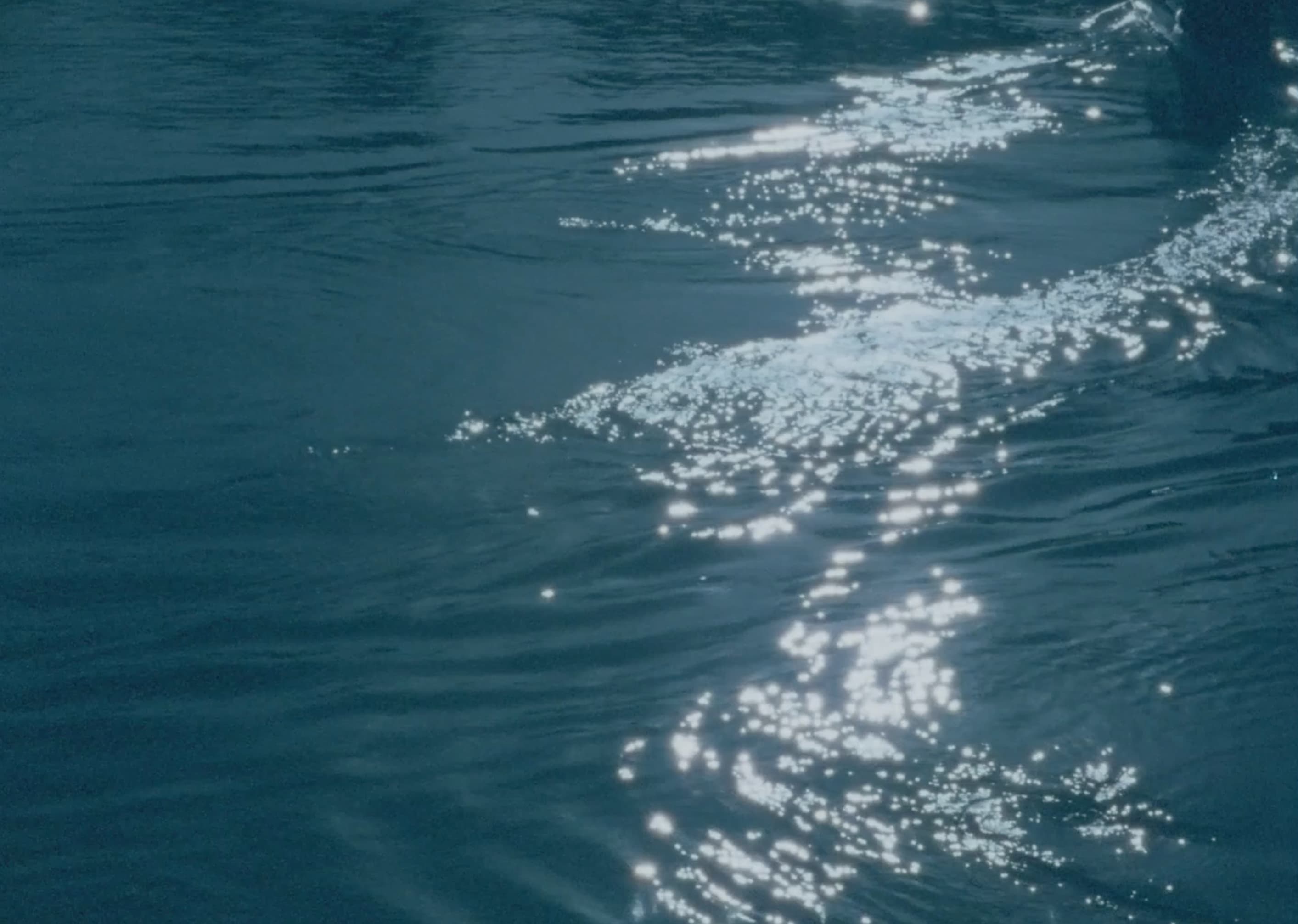
Dense and layered, but ever elegant, the locations portrayed in E42 and their relationship with figure and voice reflects not only the history of fascism but also resistance. Even a brief passage that moves beyond the capital to the island of Ustica connects to the life and death of Antonio Gramsci, imprisoned by Mussolini for his antifascist beliefs and activities. Here, as with the imposing EUR, the ideologies of the past era may seem fixed but are in fact proven capable of subversive reimagining.