Esfir
2020
Film
Feminism
Director: Cynthia Madansky
Cinematographer: Max Efros, Cynthia Madansky
Artistic Co-director: Yana Mikhalina
Performers: Anna Tereshkina, Olelush, Oksana, Aiym Baky, Mila Romanova
Vokrug-da-okolu Art Laboratory: Leila Alieva, Daria Bresler, Evgenia Myakisheva, Vlada Milovskaya, Elizaveta Vitkovskaya
Music: Zeena Parkins
16 mm, Video ◊ 70 min.
“I will have four heroines. I would like to stay near each of them with a camera for two or three months.” So wrote the great Soviet feminist filmmaker Esther Shub, in a 1930 published-manifesto about her desire to create a film that represented and celebrated the status of women after the Bolshevik revolution. After this documentary proposal was rebuked by the Soviet film studio, she went on to write a feature length narrative script entitled "Women" that too went unrealized.
Nearly a century later, Cynthia Madansky translated, and adapted excerpts from the manifesto and script into a polyphonic portrayal of four contemporary women living in Russia.
Unsurprising, given both Shub and Madansky’s progressive political foundations, is the repeated emphasis on labor as a vector to understand these women’s lives and their position in the contemporary world. Variously pivoting on the ideas of labor, sex work, motherhood and “the other” these isolated portraits are in dialogue with each other, with Shub’s writing, and with her script.
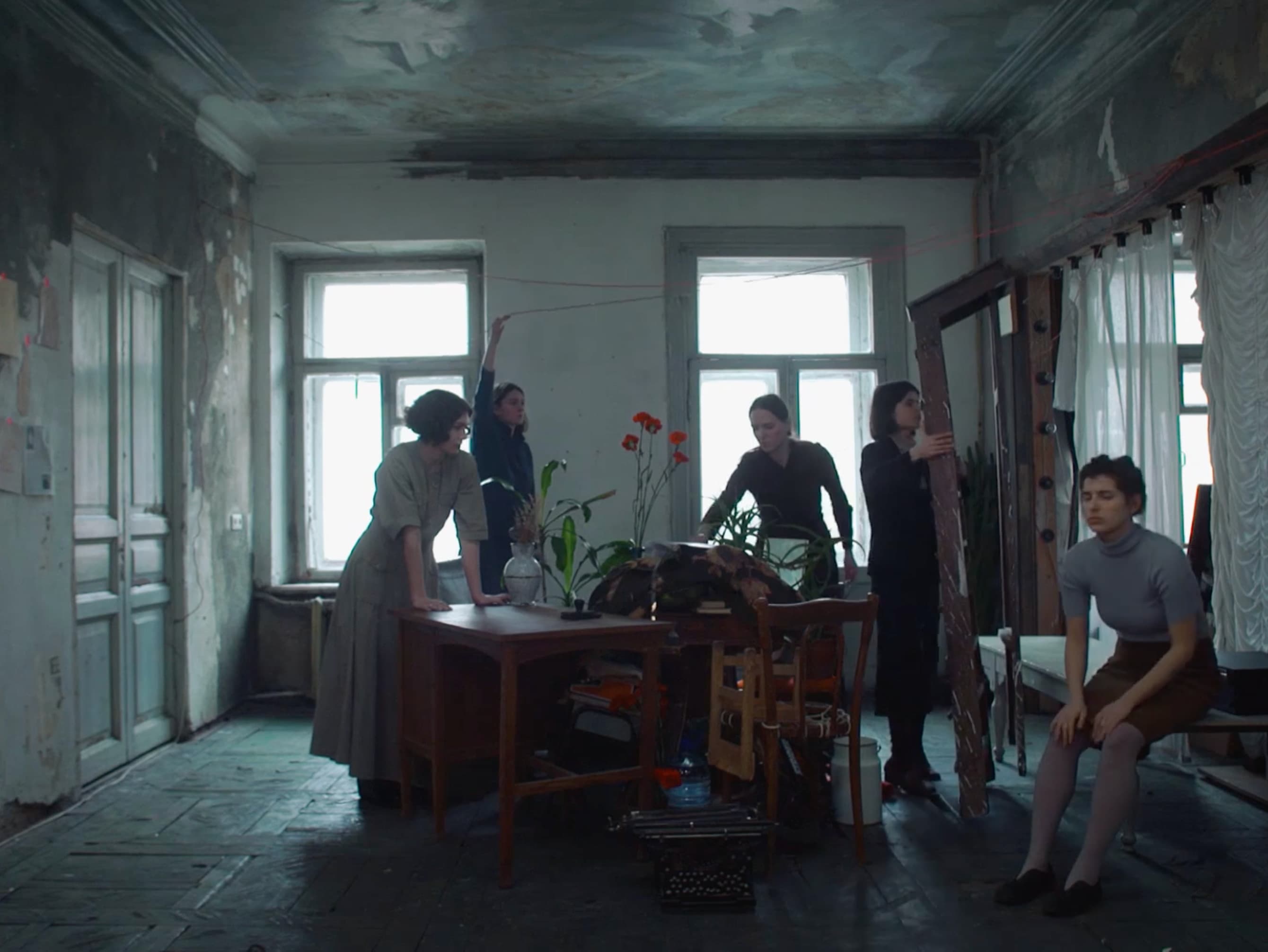
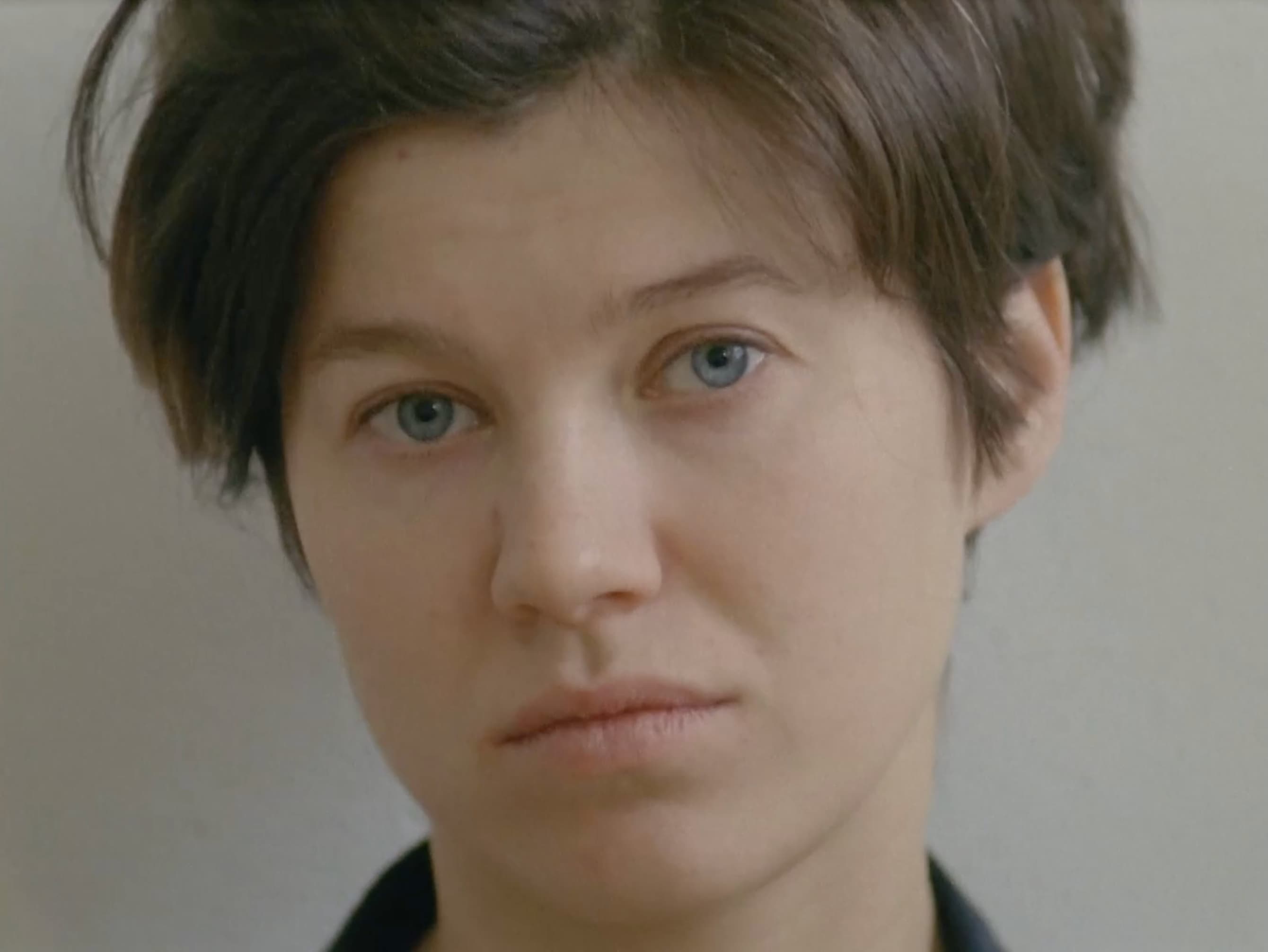
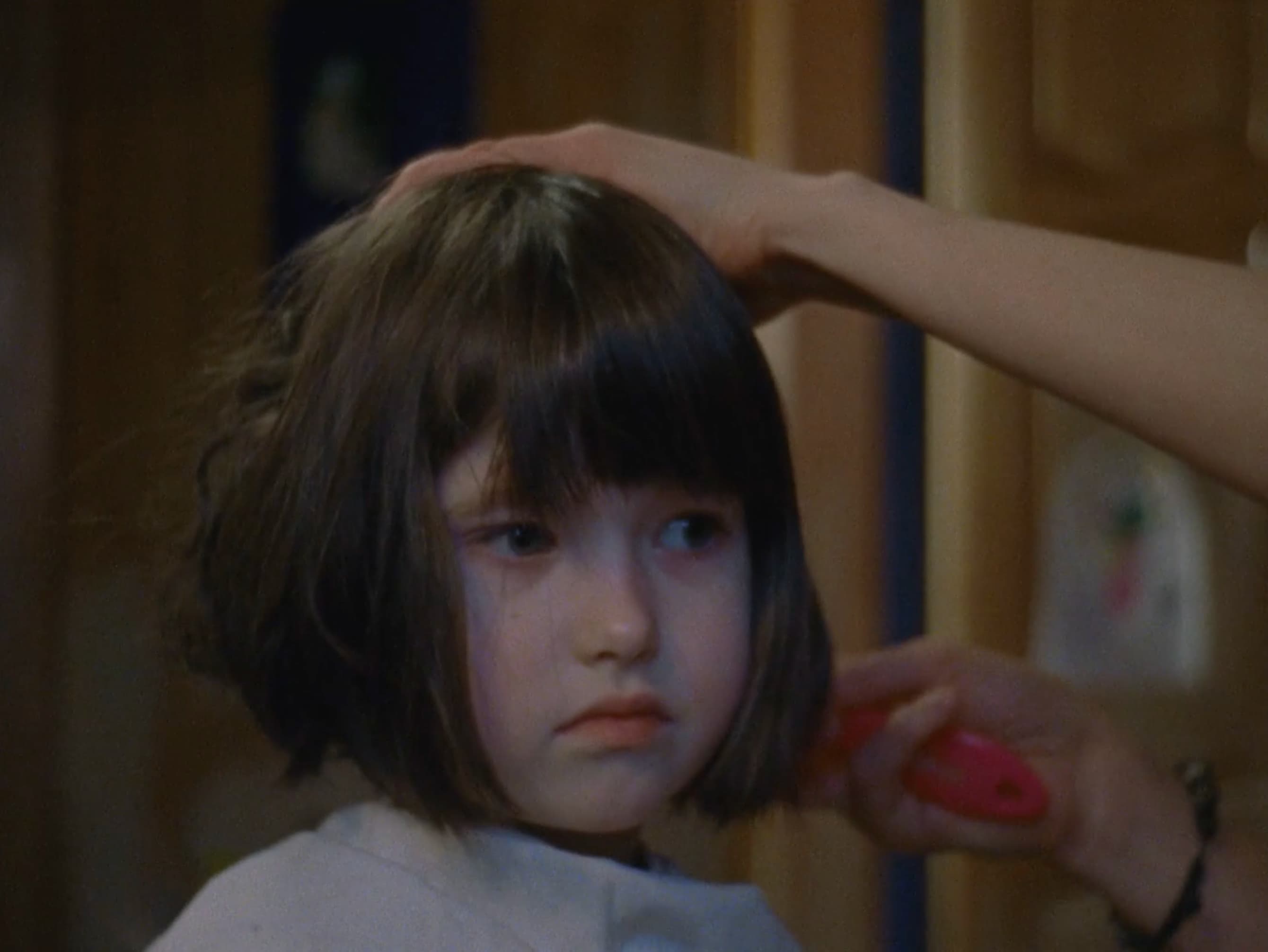
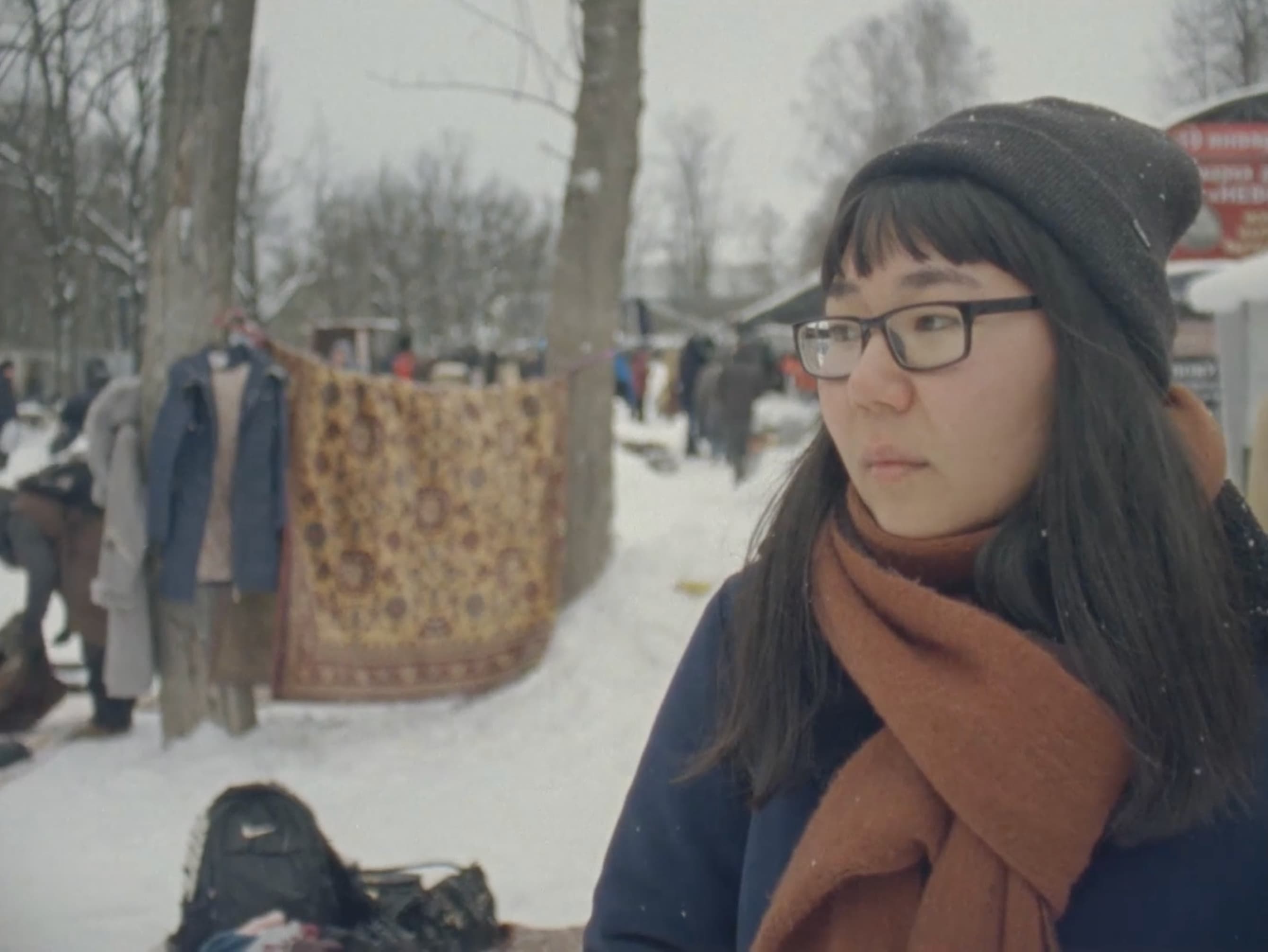
Esfir begins with a performance by St Petersburg’s Vokrug-da-Okolo, Art Laboratory collective, creating a Shubesque studio where an articulation of the her desire to create this film and her right to work is emphatically pronounced. The film then introduces polemic portraits of the four women: Anna, an artist: Olelush, a mother; Aiym, a Kyrgyz migrant; and Mila, a sex worker. Each has written her own script about their relationship to feminism, with details of their lives illuminated by way of personal testimonials and theoretical readings.
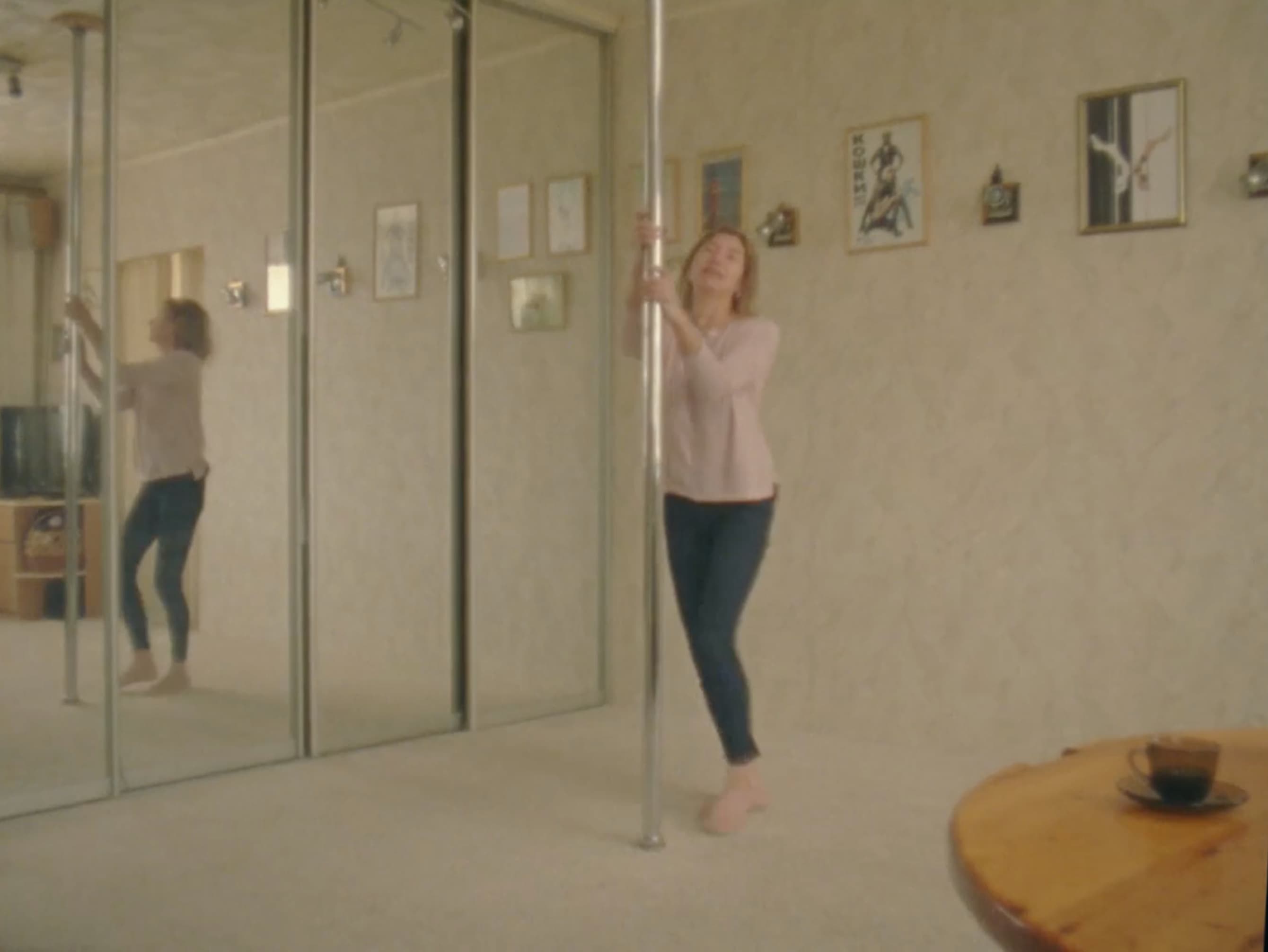
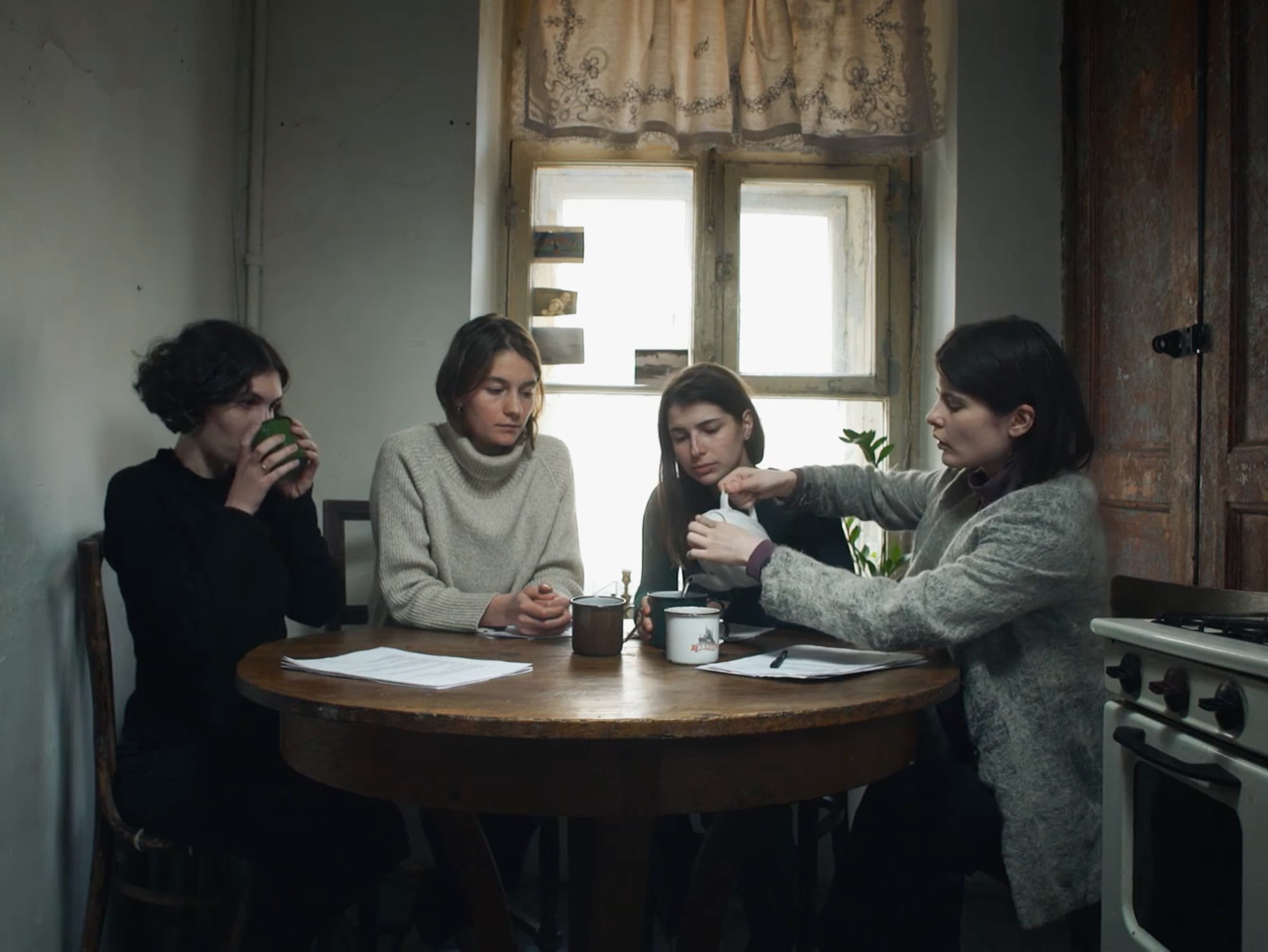
Shot on 16mm, the film is unhurried and intimate, beautiful and tender in spite of—or perhaps in response to—the often-harsh nature of their circumstances. We see Anna navigating barren underpasses and industrial zones, but also as she works on art; we see Olelush and her daughter in moments of play but also hushed intimacy; we see Aiym ride public transportation and eat alone; we see Mila smoke in her kitchen and perform routines on the pole installed in her apartment. Bookending the film is again the Vokrug-da-Okolo collective sitting around a kitchen table reading excerpts from Shub’s unrealized script.
Less explicit, but reflected throughout, is a concept of creative and artistic labor. Expanding the scope and scale of the original concept, Shub herself emerges as a fifth woman whose life, ideals, and work is constantly challenged and thwarted by the systems—both Soviet and cinematic—that she had dedicated her life and practice to.
Madansky’s selection of passages from Shub’s texts reflects on Shub’s sense of artistic ambition and ultimate disappointment. At this point in Shub’s career when she conceptualized "Women", she was respected as a brilliant editor, most notably for the creation of the ‘compilation film’ genre with the classic Fall of the Romanov Dynasty (1927), constructed entirely out of pre-revolutionary archival film. In her efforts to reimagine her practice with "Women" she is unsupported by a studio with its demands to work on other projects. Her response to the protracted slight: “One should not be wasting all her energy on proving her right to work.”
Esfir, is an honoring of Shub, Madansky foregrounding with tenderness and grace her predecessor’s axiom and belief that “art could provide an accurate depiction of life.”